Why Scans Are Essential Before
Proton Beam Therapy
Learn why medical imaging plays a critical role in planning and delivering
proton beam therapy safely and accurately.
Learn why medical imaging plays a critical role in planning and delivering
proton beam therapy safely and accurately.
IN THIS ARTICLE
If you are being considered for proton beam therapy, one of the first steps in your treatment journey will usually involve medical imaging such as a CT scan, MRI scan, or sometimes a PET scan. These scans are an essential part of the preparation process before treatment begins.
Proton beam therapy is an advanced form of radiotherapy that targets tumours with exceptional precision. In order to deliver this treatment safely and effectively, doctors must have a detailed understanding of the tumour’s exact size, shape, location and relationship to surrounding tissues. Imaging provides this information and allows your oncology team to create a treatment plan tailored specifically to you.
In this article, we explain why scans are required before proton beam therapy, how they help guide treatment, and the different types of imaging that may be used.
Before proton beam therapy can begin, detailed scans are required to determine:
Using these scans, the radiotherapy team creates a personalised treatment plan. The tumour and a small surrounding margin are carefully outlined on the images, and specialised software calculates how the proton beam will travel through the body.
This planning process ensures that the radiation dose is delivered accurately to the tumour while protecting healthy tissues as much as possible.
Because proton therapy relies on precise targeting, imaging is one of the most important steps in preparing for treatment.
Imaging is not only used during the planning phase. It also plays an important role during each treatment session.
Before the proton beam is delivered, your radiotherapy team will confirm your positioning using image-guided radiotherapy techniques. These may include quick CT scans or X-ray images taken immediately before treatment.
These images ensure that the treatment area is aligned correctly for precise treatment. Even very small movements or anatomical changes can alter the path of the proton beam, so careful verification is essential.
In some cases, patients may be fitted with custom positioning devices to help maintain the same body position during each treatment session. These devices help ensure that the treatment is delivered with the same accuracy every day.
After treatment has been completed, scans continue to play an important role in patient care.
Follow-up imaging allows doctors to monitor how the tumour has responded to treatment and assess any changes in surrounding tissues.
These scans help the clinical team evaluate:
Regular follow-up imaging forms part of the long-term management of many cancers
Several imaging techniques may be used during the planning and monitoring of proton beam therapy. Each provides different information that helps guide treatment decisions.
CT scanning is one of the most commonly used imaging methods in radiotherapy planning.
CT scans use X-rays to create detailed three-dimensional images of the body, allowing doctors to visualise the tumour and surrounding anatomy.
These scans are used to determine the exact shape and position of the tumour, as well as to plan how the proton beam will travel through the tissues and target the tumour precisely.
A CT scan is quick and painless. During the procedure, you will lie on a table that moves through a ring-shaped scanner while images are taken.
Although CT scans involve a small amount of radiation, the dose used in medical imaging is carefully controlled and considered safe.
MRI scans provide highly detailed images of soft tissues, making them particularly useful when tumours are located near complex structures.
MRI uses magnetic fields and radio waves rather than radiation to produce images. In some cases, MRI scans provide clearer visualisation of the tumour and better soft tissue differentiation than CT scans alone.
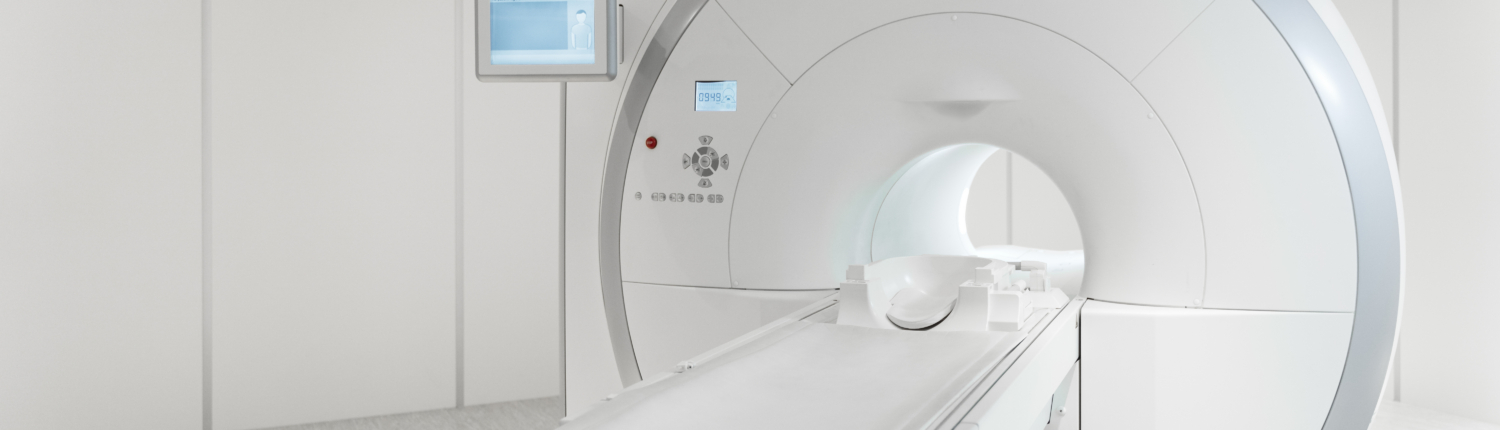
The procedure typically takes longer than a CT scan and involves lying within a tunnel-shaped scanner. While the machine can be noisy, the scan is completely non-invasive.
MRI scans are often used alongside CT images to improve tumour localisation and ensure planning accuracy of the treatment.
PET scans provide additional information about how active cancer cells are as well as provide anatomical definition of tumour and secondaries in lymph nodes.
During a PET scan, a small amount of radioactive tracer is injected into the bloodstream. Cancer cells absorb this tracer more readily than normal tissue, allowing them to be clearly identified on the scan.
PET imaging is often combined with CT scanning to provide both structural and functional information about the tumour.
This helps doctors assess whether the cancer has spread to nearby lymph nodes or other areas of the body.
Proton beam therapy is an advanced radiotherapy option that may be recommended for certain cancers, particularly when tumours are located near important organs or structures.
Accurate imaging is fundamental to the success of this treatment. By using CT, MRI and PET scans, doctors can design highly personalised treatment plans that deliver radiation precisely to the tumour.
If you would like to learn more about whether proton beam therapy may be appropriate for your condition and the cancers treated by Dr Ram, discuss your options with a specialist oncologist.
My approach combines advanced clinical expertise with compassion, honesty, and clear communication. Patients consistently describe my calm, approachable manner and my commitment to explaining every stage of treatment with care and to being there throughout their cancer journey.
Whether you are newly diagnosed with head and neck cancer, exploring proton beam therapy, or seeking private oncology appointments in London, I offer expert, personalised cancer care focused on precision, evidence, and your long-term wellbeing.
Dealing with cancer can be a difficult and emotionally challenging situation. Dr Ram always has your best interests and wellbeing at heart.
Make an enquiry or book an appointment today to see how Dr Ram can help.

 A Patient Guide to Skull Base Tumours